
English
At Travis St Lawrence CE Primary School, we strive that our English curriculum is dynamic and captures the imagination and ambitions of our whole school.
Our curriculum is broken down into writing, reading, SPaG and phonics.
Writing
Our topics are designed thoughtfully around the new curriculum and are chosen carefully to ensure that writers from all backgrounds are well catered for. We have nurtured the notion that SPaG and writing work simultaneously and in the new climate of accuracy and precision, our children are trained to become effective proof-readers, capable of editing their work accordingly. In writing, we use the 'Pathways to Write' scheme which links to diverse, high-quality texts, ensuring engaging and purposeful English lessons. Our scheme ensures a clear progression and tracking of skills, assessment materials, a progressive guide to genres through a wide range of engaging texts and links to key curriculum themes. Key writing skills appear as 'mastery keys' for pupils to develop through a variety of activities and writing opportunities. Teaching specific skills in each unit will allow pupils to really master their writing techniques, providing excellent, focused assessment opportunities. We also plan thoughtfully for writing across the curriculum and encourage our pupils to learn the craft of writing required to communicate effectively in specific subjects. For example, in Science there is a real emphasis on use of language that is objective, precise and factual. In History, we encourage children to carefully evaluate and interpret their sources; to link causes and effects and assign significance to ideas and events. In any writing process, we nurture the concept of writing like a reader and reading like a writer and value the importance of planning, drafting and editing. The writing process and supporting pedagogy are underpinned by key aims.
Travis-Writing-Lesson-Non-negotiables-.pdf
Handwriting
At Travis, we are fully aware that teaching handwriting effectively impacts the wider curriculum and the development of the whole child, offering, among others the following benefits:
-
When children can write autonomously they can concentrate on what to write rather than how to write so their ideas and writing content will improve
-
A significant impact on children's self-esteem, when they see beautiful writing which they have created with their own hand
-
The huge effect of good handwriting on children's motivation and enjoyment for writing
-
Develops a strong sense of pride which cannot be measured by attainment level or standardised testing
-
Where children have good handwriting, and are proud of how their work looks, they become far more meticulous about spelling, punctuation, grammar and their use of language.
-
When children take care to produce beautiful work they are more likely to take care in other areas of their life – e.g care for resources, care for each other.
As a school, to teach handwriting, we use key principles from the RWI handwriting resources before progressing onto 'achieving excellence in handwriting'.
Travis-St-Lawrence-Writing-Transcription-Progression.pdf
Reading
At Travis St Lawrence, we recognise that reading for pleasure makes a big difference to a child’s educational performance and helps them develop a broader vocabulary, increased general knowledge, confidence and a better understanding of the world around them. Children begin school with a concentrated and systematic teaching of phonics which follows a carefully planned and tightly structured approach through the use of the Read, Write Inc programme and Freshstart for older readers needing to catch up more rapidly. Pupils are given opportunities to apply what they have learnt through reading – including time to read aloud to adults to practise their decoding skills and comprehension of what they are reading. As children leave these earlier programmes, they then access the 'Pathways to Read' scheme which uses high-quality texts to teach reading comprehension and fluency through a mastery approach. Alongside this, they are introduced to ‘Cracking Comprehension’ which focuses on the teaching of key reading skills, such as inference and retrieval, in a range of fiction and non-fiction texts. Our teachers supplement this with a variety of exciting reading sessions linked to current topics and events over the course of the year, providing children with the practice and experience they need to tackle more complex questions and themes in more challenging texts as they progress through Upper Key Stage Two.
As you walk around our school, you will see that our reading culture and ethos is really helping to create the ravenous, lifelong readers that we want our children to become.
We ensure that we follow the new reading framework to celebrate reading.
A love of reading...
All children will go to our school library once a week and bring a 'bedtime' book home. These will help develop vocabulary and also instil a love of reading within children. Please take time to share these as a family and enjoy! See below for some tips on how to share these books.
Staff are early reading experts...
All relevant staff, from nursery to KS2, have been trained in RWI phonics. The Reader Leader has led training for staff, including coaching and team teaching, where required.
How can parents get involved?
Involving families is an important part of our reading culture. Results of international reading studies have shown that children who are supported in their reading at home are more likely to enjoy reading and tend to achieve more highly at school. We want our children to read at home through choice. For this to happen, we engage with families to extend the culture of reading that the school has developed. Strategies include:
-
Parents and grandparents regularly volunteer come in to school and listen to children read.
-
We offer advice and printable materials on our school website, along with input from individual class teachers on dojo and open evenings.
-
Each class has a display to motivate pupils to read regularly at home.
-
Our school target is for children to read at least three times a week.
-
All pupils regularly take home a RWI phonics book that is matched to their phonics ability and a book for pleasure. When children move off the RWI programme, they are moved onto our colour banded system.
Reading with your Child - Booklet for Parents
SPaG
Spelling, punctuation and grammar have become the driving force in writing recently and as teachers at Travis, we have firm reservations for teaching grammar that links meaningfully to the way our children write.
Travis-St-Lawrence-Writing-Progression-Composition-and-SPaG.pdf
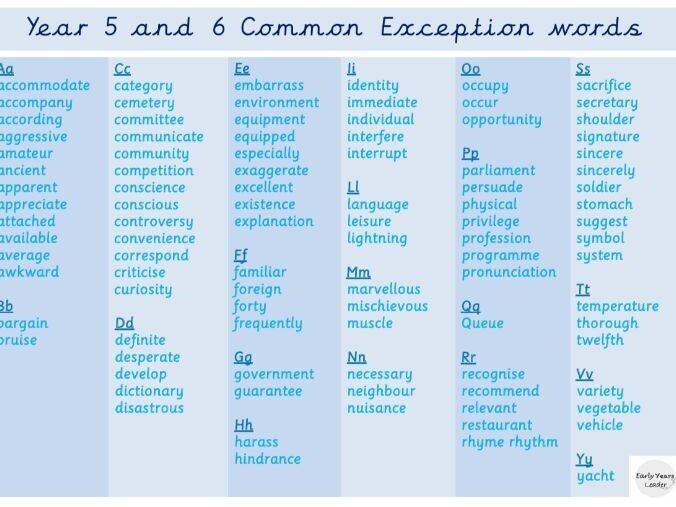
We use Read Write Inc. Spelling as our chosen spelling scheme but supplement this with spelling zappers and daily spelling practices.
Read Write Inc. Spelling for Years 2-6/P3-P7 has been created to meet the more demanding spelling requirements of the 2014 National Curriculum.
Puts the complex requirements of the curriculum into snappy 15-minute lessons, which are easy to slot into your timetable
Makes spelling fun! Aliens from an exciting online spelling planet introduce spelling rules and concepts
Read Write Inc. Spelling Online now includes the Extra Practice Zone: over 1,000 new activity screens for whole-class practice, focusing on the areas children often find challenging. A Class Login is also available enabling children to do the practice activities at home provides plenty of writing practice with a clear record of progress.
To summarise on a page what we do in reading, writing and handwriting , we have our 'Travis Way' documents and long-term plan. Please see below:
Travis Early Reading and Writing


Phonics
Our school uses:
Read Write Inc. Phonics for our children in Nursery to Year 2 and for our children in Years 3 and 4 who need to catch up
Read Write Inc. Fresh Start for our children in Years 5 and 6 with a reading age of nine and below
Read Write Inc. Spelling for our children in Years 2 to 6
Read Write Inc. Phonics, Fresh Start and Spelling are highly successful literacy programmes for 4-13 year-olds created by Ruth Miskin and published by Oxford University Press. The training and support from Ruth Miskin Training, rated Outstanding by the Department for Education, ensure the programmes have the best chance of success in schools.
The four Read Write Inc. programmes are carefully matched to the new curriculum, giving your children the best chance of success in the national tests. They show teachers, teaching assistants and parents step-by-step how to teach all children to become fluent readers, confident speakers and willing writers.
Phonics text
Read Write Inc. Phonics is used by over a quarter of the UK’s primary schools. It is a comprehensive literacy programme, weaving decoding, comprehension, writing and spelling together seamlessly. Ruth Miskin developed the programme during her time as a headteacher in Tower Hamlets. She believes that in order for a school to be successful, every headteacher needs to adopt a consistent whole-school approach to teaching reading, writing and spelling. Fidelity to the teaching programme, rigorous assessment, tracking and one-to-one tutoring ensure that schools guarantee progress for every child.
For information and tutorials on how to support your child learning to read go to: http://www.ruthmiskin.com/en/parents/
Fresh Start text
Read Write Inc. Fresh Start raises attainment rapidly in reading and writing. The programme boosts children’s confidence by matching what they read with the sounds they know using specially created age-appropriate texts and anthologies. Read Write Inc. Fresh Start provides clear and cumulative writing activities to build vocabulary and punctuation.
For more information go to: https://global.oup.com/education/content/primary/series/rwi/fresh-start/?region=international
How does RWI work at Travis?
The children in EYFS and KS1 are assessed by the RWI leader and grouped according to their ability.
They work in small groups with teachers and teaching assistants every day. At the end of each half term the children will be assessed again to check they have made progress and will be grouped again.
When using RWI to read the children will:
-
Learn to read effortlessly so that they can put all their energy into understanding what they read.
-
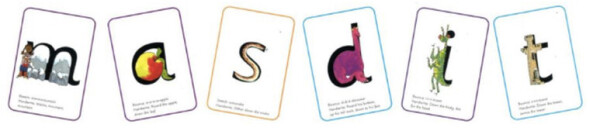
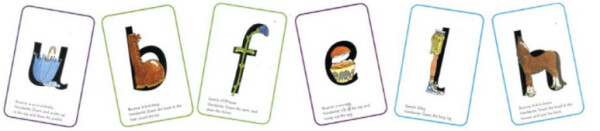
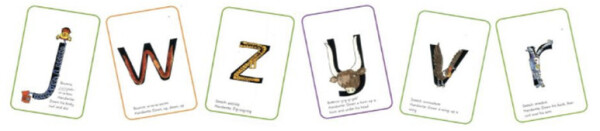
Learn 44 sounds and the corresponding letter/letter groups using simple picture prompts.
-
Learn to read words using Fred Talk.
-
Learn to read words by blending the sounds together.
-
Read lively stories featuring words they have learnt to sound out.
-
Show that they understand the stories by answering ‘Find It’ and ‘Prove it’ discussion questions.
When using RWI to write the children will:
-
Spell effortlessly so that they can put their energy into working out what they want to write.
-
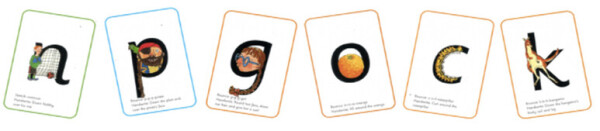
Learn to write the letters/letter groups which represent the 44 sounds (graphemes).
-
Learn to write words by saying the sounds in Fred Talk.
-
Learn to write simple and then increasingly complex sentences.
-
Write dictated sentences working on sentence structure.
-
Compose a range of texts using discussion prompts.
-
Write simple sentences.
Talking
When using ‘Read Write Inc’ the children work in pairs to:
-
Answer questions to practise every activity.
-
Take turns talking to each other.
-
Give positive praise to each other.
Blending
Children learn to read words by blending the letter-sounds that are in the Speed Sound sets.
Help your child learn to read words by sound-blending e.g. c-a-t = cat
Help children to say the pure sounds, as quickly as they can, and then to blend the sounds together to say the whole word.
How can I support at home?
You can help your child at home by practicing their sounds regularly using their speed sounds book. Your child will also bring home two books each week which will contain sounds that they already know. Please read with them 3 times per week and record in their reading record. Every book your child brings home with be carefully matched to their phonic knowledge.
You can help your child with their reading by:
-
Looking at books together and talking what is happening in the pictures or asking questions
-
Reading books to your child and listening to them read
-
Talking to your child and introducing them to new and ambitious vocabulary e.g. “munch”, “scoff” or “devour” instead of “eat”
-
Knowing the 44 sounds and how to pronounce them
Further information and helpful videos can be found here.